
Choosing the best time to visit Himeji Castle
The best time to visit Himeji Castle depends on what you want to do as well as what you hope to photograph. Spring blossom and November foliage provide seasonal reasons to come, while the temperature matters for the climb inside. Use a seasonal window to choose the trip, then use the weather forecast for the day to decide clothing, water and the balance between outdoor walking and the tower.
The castle has steep, narrow stairs and no lifts or air conditioning in the towers. A comfortable city walking temperature can feel different during the interior ascent. Allow approximately 1.5 to 2 hours for the castle, with possible extra time in crowds. A clear plan for the inside visit is more useful than trying to fit every activity into a single weather window.
Regular opening is 09:00 to 17:00, with last admission at 16:00; parts of the buildings begin closing from 16:30. The castle closes on 29 and 30 December. Keep these hours distinct from evening lighting events. Seasonal photographs describe a scene, while your actual visit still depends on the weather and conditions on your date.
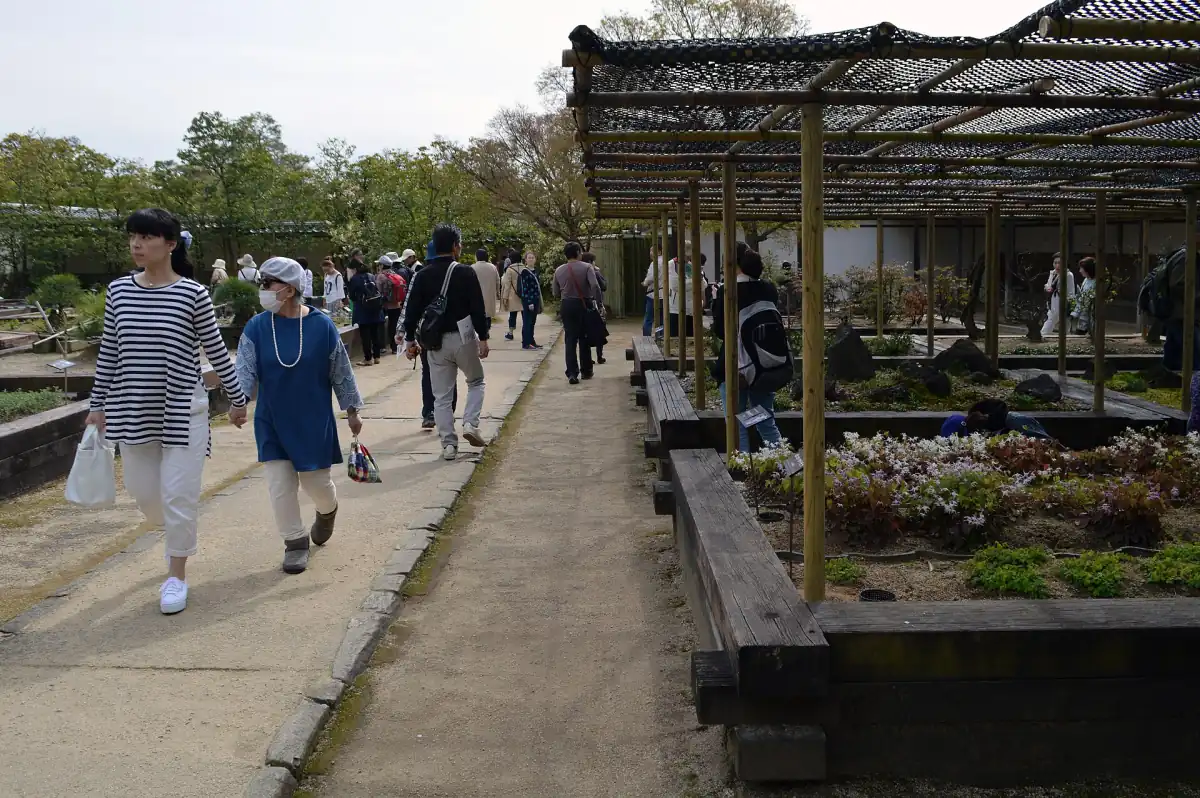
Himeji Castle cherry blossom
The city flower calendar places cherry blossom from late March to mid-April. Around the castle there are approximately 1,000 cherry trees, including Somei-yoshino and weeping cherries. Development varies with the weather, so a date within that window is a seasonal choice rather than a promise of full bloom. Allow time to look at the surroundings as well as visiting the paid interior.
Outer blossom-viewing areas are free, while the inner castle area requires admission. The night cherry blossom event held from 27 March to 5 April 2026 has ended; those dates do not establish a future schedule. For a guided outdoor option, the bicycle outing includes 4 hours with a local guide, rental bicycle until 18:00, tour photos, matcha and a small sweet. Castle and Koko-en admission are extra, and the outing is weather dependent.
Explore Himeji by bicycle
For time outdoors, consider a guided bicycle tour around Himeji.
Hand-picked tours, booked through GetYourGuide. Prices are indicative starting prices in US dollars (as of October 2026). Tap a tour for live availability and the current price in your currency.
A weather-dependent bicycle outing
Ride with a local guide and take a matcha break with a small sweet; castle and garden admission are extra.
Autumn foliage and November plans
The citywide foliage framework runs from early to late November. Actual colour depends on the weather, so leave the choice between a castle-centred day and a wider outing open until nearer the visit. Koko-en provides a separate garden visit, while Mount Shosha adds bus, ropeway and walking stages to the day.
The Mount Shosha autumn festival is dated 21 to 23 November 2026, with cultural-property special opening from 10:00 to 16:00 and foliage lighting from 17:00 to 20:00. Those dates have their own evening ropeway arrangements. Treat an event visit as a separate timetable decision rather than extending ordinary daytime plans without checking the return journey.
JMA monthly climate normals for Himeji, 1991 to 2020
The figures in the table are Himeji station climate normals for 1991 to 2020. Maximum and minimum mean the monthly averages of daily highs and lows, not temperature extremes. Rainfall is the average monthly total. They help compare seasons but are not a forecast for 2026 or a prediction for a particular travel date.
July has the largest rainfall total in this normal series, and January the smallest; September is also relatively wet. A rainfall total does not tell you how many days will be rainy. Compare the temperature and rainfall together, especially if the plan includes both the tower climb and longer outdoor walks. Carry a practical alternative plan rather than assigning exact rain-free hours from monthly averages.
| Month | Mean daily high °C | Mean daily low °C | Monthly rainfall mm |
|---|---|---|---|
| January | 9.6 | 0.2 | 36.9 |
| February | 10.4 | 0.5 | 48.6 |
| March | 13.8 | 3.2 | 92.0 |
| April | 19.1 | 8.2 | 104.7 |
| May | 23.7 | 13.5 | 127.3 |
| June | 26.8 | 18.5 | 160.4 |
| July | 30.5 | 23.0 | 184.3 |
| August | 32.5 | 24.0 | 105.4 |
| September | 28.6 | 19.8 | 177.8 |
| October | 23.1 | 13.4 | 108.7 |
| November | 17.3 | 7.3 | 61.2 |
| December | 11.9 | 2.4 | 47.5 |
Summer heat during the climb and a winter visit
August averages a daily high of 32.5°C and a daily low of 24.0°C in the normal series. Bring a closable water bottle and sun protection, and leave time for the stairways. Shoes come off inside; carry a shoe bag instead of using bags as overshoes. The wooden interiors and repeated changes between walking and climbing deserve attention when packing.
January averages a daily high of 9.6°C and a daily low of 0.2°C. Plan clothing for a cool morning and remember that shoes are removed in the buildings. Thick socks or suitable indoor footwear are recommended for the wooden floors. Choose your arrival time around the visit itself; the transport guide helps separate train time from the approach on foot.
Evening light and conservation work
General castle lighting runs from sunset to midnight, with special light sequences at 20:00 and 21:00 for 15 minutes. This exterior lighting does not provide nighttime tower entry. Atarayo is scheduled from 20 November 2026 to 11 January 2027, from 17:00 to 22:00, along the central corridor and around the castle parks. Choose an evening walk on its own terms rather than treating it as an interior tour.
Conservation work beginning in early July 2026 is expected to last until approximately the end of July 2027. Scaffolding and a materials area can affect views and lighting. Keep this in mind when planning photographs, and choose the season for the overall visit rather than expecting every historical photo viewpoint to look the same.
Questions for your visit
When is cherry blossom usually possible?
The citywide window is late March to mid-April, depending on weather. Full bloom is not tied to a guaranteed date.
Is November suitable for autumn foliage?
The city calendar places foliage in November. Colour and its timing still vary with conditions.
Are the climate numbers a forecast?
They are historical climate normals for Himeji from 1991 to 2020. Use a current forecast for the day of your visit.