
Himeji Castle history in context
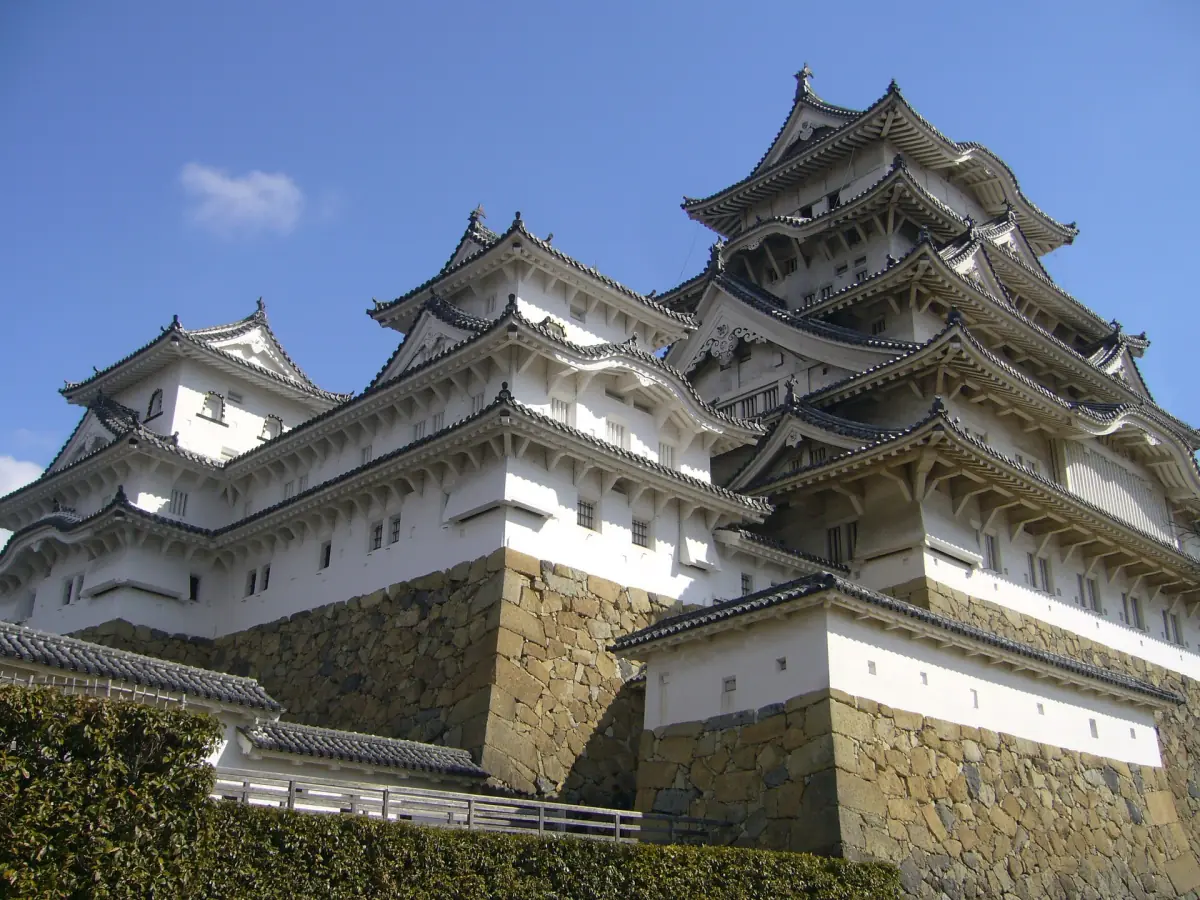
Himeji Castle history extends beyond the moment when its familiar white tower complex took shape. Early fortifications, successive changes of ownership, large building campaigns and modern restoration all belong to the story. The castle stands in Himeji in Hyogo Prefecture, and its white plastered walls give it the name Shirasagi-jo, the White Heron Castle. That appearance is a useful starting point for looking more closely at the wooden buildings and defensive setting.
Read the dates as stages rather than one construction year. A medieval fortification, Hideyoshi's tower, Ikeda's connected keep complex and Honda's western expansion represent different parts of the site's development. This page follows those changes. The interior visiting guide deals separately with the practical route, shoe rules and stairs you will encounter during a visit.
Akamatsu, Hideyoshi, Ikeda and Honda
The early sequence begins in 1333 with a temporary fortification established by Akamatsu Norimura. Akamatsu Sadanori expanded the fortification in 1346. These dates belong to the site's medieval beginnings; they should be kept distinct from the later tower complex seen today. Thinking in phases helps explain why the castle cannot be assigned to a single builder without losing much of its history.
The castle passed to Hideyoshi in 1580, and his three-storey tower was completed the following year. The next major chapter belongs to Ikeda Terumasa, whose large expansion began in 1601. Honda Tadamasa took over in 1617 and expanded the western part of the site. The named builders provide a framework for understanding change, with the surviving setting reflecting a sequence of work rather than one uninterrupted project.
Visit the castle with a guide
This castle visit includes a guide and admission.
Hand-picked tours, booked through Viator. Prices are indicative starting prices in US dollars (as of October 2026). Tap a tour for live availability and the current price in your currency.
A guided visit to the historic castle
Connect the castle buildings with their historical setting on a guided visit that includes admission.
The great expansion of 1601 to 1609
Ikeda's building campaign began in 1601 and brought the connected tower complex to completion in 1609. Those are the dates to use when describing the large expansion that shaped the castle's present identity. They sit between Hideyoshi's earlier three-storey tower and Honda's later work in the west. Keeping that order clear gives the silhouette a historical setting beyond its value as a photograph.
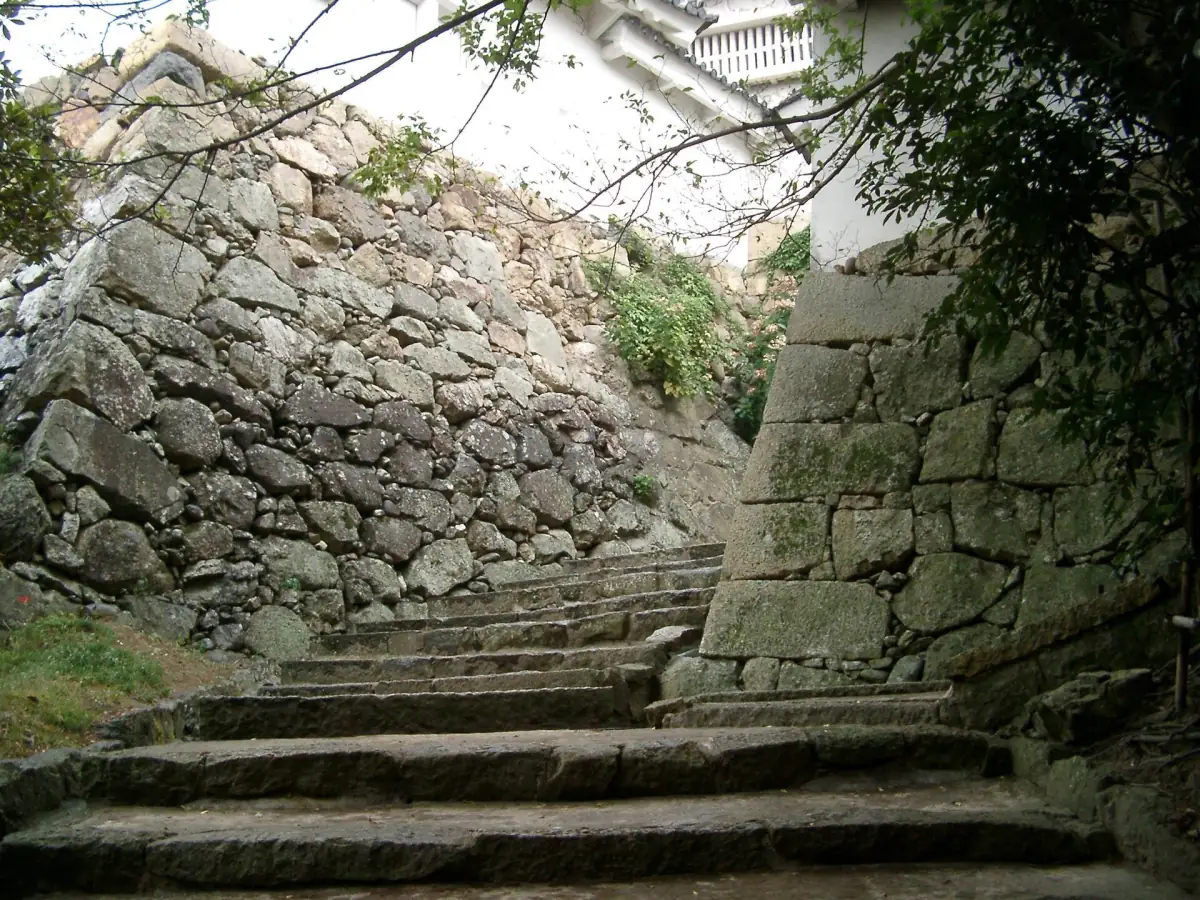
On a visit, take time to consider the buildings together with their stone bases and the surrounding defensive layout. The keep is part of a wider fortified complex, and its architecture has to be read in that setting. A guided castle visit featured here includes a guide and admission. It offers a way to connect the physical place with the chronology while you are there; the visit is a castle tour rather than an academic course.
Wooden architecture, white walls and defensive design
The wooden architecture of the early shogun period, white plastered earthen walls and developed defensive structures are central to Himeji's significance. The white surfaces explain the heron association, while the timber construction gives the interior a different character from the stone walls supporting the buildings. Look at these materials as related parts of the castle instead of reducing the whole site to its outer colour.
That also helps connect history with responsible visiting. Wooden floors and historic structures need care, and visitor instructions form part of that protection. Shoes are removed inside the main keep and other buildings where required. Closed areas and staff directions help protect cultural property as well as the people moving through it. You can find wider castle guided visits if you prefer interpretation during the walk.
UNESCO recognition in 1993: criteria i and iv
Himeji-jo entered the UNESCO World Heritage List in 1993 under criteria i and iv. Its recognition concerns both the achievement of the architecture and its importance as an example of this kind of fortified building ensemble. The wooden structures, white plaster and defensive setting belong together in that description. The World Heritage property covers 107 hectares, with a buffer zone of 143 hectares.
Use the inscription as a reason to look beyond a single viewpoint. The relationship between the keep, adjoining buildings, walls and wider setting helps explain why the castle matters. Historical interest and the practical demands of visiting still need separate time in your day. For the latter, the opening-hours guide helps place a daytime castle visit within the regular access period.
Restorations in 1956 to 1964 and 2009 to 2015
Major dismantling and repair work on the tower complex took place from 1956 to 1964. Another principal keep restoration began in 2009, followed by reopening in 2015. These are chapters in the continuing care of the historic buildings. Their completion marks substantial past projects, while conservation remains part of the castle's present life.
Current work runs from early July 2026 to approximately late July 2027 at Ni-no-yagura, Mizu-no-ichimon, Mizu-no-nimon and adjoining walls. Scaffolding, materials in part of Bizenmaru and effects on views or lighting can accompany that work. Seeing conservation alongside the older architecture makes the restoration dates more tangible: the castle is a historic structure whose care continues during the period of your visit.
Frequently asked questions
Who built Himeji Castle?
Its development involved several phases: Akamatsu fortifications, Hideyoshi’s tower, Ikeda’s major expansion and Honda’s later work in the west.
When was the present tower complex completed?
Ikeda Terumasa began the large expansion in 1601. The connected tower complex was completed in 1609.
When did the castle become a World Heritage site?
UNESCO inscribed Himeji-jo in 1993 under criteria i and iv. Major restoration projects followed in the modern period, and conservation continues.